

French
All Modern Foreign Language teachers are committed to promoting excellence and to the great value of acquiring skills in foreign languages for pupils’ personal and academic development.
At KS3, pupils begin their French journey with a dynamic and engaging programme designed to build confidence and curiosity from day one. Lessons focus on developing key skills in listening, speaking, reading, and writing, while encouraging students to use the language in real-life contexts.
We use a wide range of interactive activities – such as role plays, games, songs, and digital tools – to make learning fun and memorable. Alongside language acquisition, pupils explore the rich cultures of French-speaking countries, helping them to understand the world beyond the classroom and develop a genuine enthusiasm for the language.
At GCSE, pupils follow a carefully structured and engaging French course that builds on their KS3 foundation and prepares them for confident communication in real-world contexts. The curriculum focuses on developing all four key skills – listening, speaking, reading, and writing – while exploring a wide range of relevant and interesting topics such as identity, culture, global issues, and future plans.
Lessons are designed to be interactive and enjoyable, with plenty of opportunities for students to practise speaking and express their opinions in French, for example role plays, debates, creative writing tasks and vocabulary games. Grammar is taught in a clear and accessible way, and cultural understanding is woven throughout, helping pupils connect language learning with the wider world.
By the end of the course, pupils are well-equipped to succeed in their exams and to use French beyond the classroom.
At A Level, pupils explore French in depth through a stimulating and intellectually rich curriculum that goes far beyond language learning. Following the new AQA specification, they study a wide range of contemporary and cultural topics – such as immigration, political engagement, and the role of family in society – while developing advanced skills in speaking, listening, reading, and writing.
A key part of the course involves engaging with authentic French literature and film. Students analyse Un secret by Philippe Grimbert, a moving novel that explores memory, identity, and the impact of World War II on a French-Jewish family, and Bonjour tristesse by Françoise Sagan, a stylish and provocative story of adolescence, freedom, and emotional complexity. These texts spark lively discussion and critical thinking, helping pupils connect emotionally and intellectually with the language. Please note that the choice of literary texts and films may occasionally be updated to reflect student interests and curriculum developments.
Lessons are interactive and varied, with debates, presentations, and independent research, and students are encouraged to express themselves confidently in French. By the end of the course, they are well-prepared for exams and equipped with skills that are highly valued in higher education and beyond.
Future Careers
Learning French opens up a wide range of exciting career opportunities for pupils, both in the UK and internationally. As one of the most widely spoken languages in the world, French is a valuable asset in fields such as international business, law, diplomacy, journalism, tourism, and education. It’s also highly sought after in organisations like the United Nations, the European Union, and multinational companies.
Pupils who study French develop strong communication, analytical, and cultural awareness skills – qualities that are increasingly important in today’s global job market. Whether pursuing careers in translation, marketing, finance, or even science and engineering, French can give students a competitive edge and broaden their professional horizons.
Beyond the classroom
The French Department offers a vibrant programme of enrichment activities and trips that bring the language to life beyond the classroom.
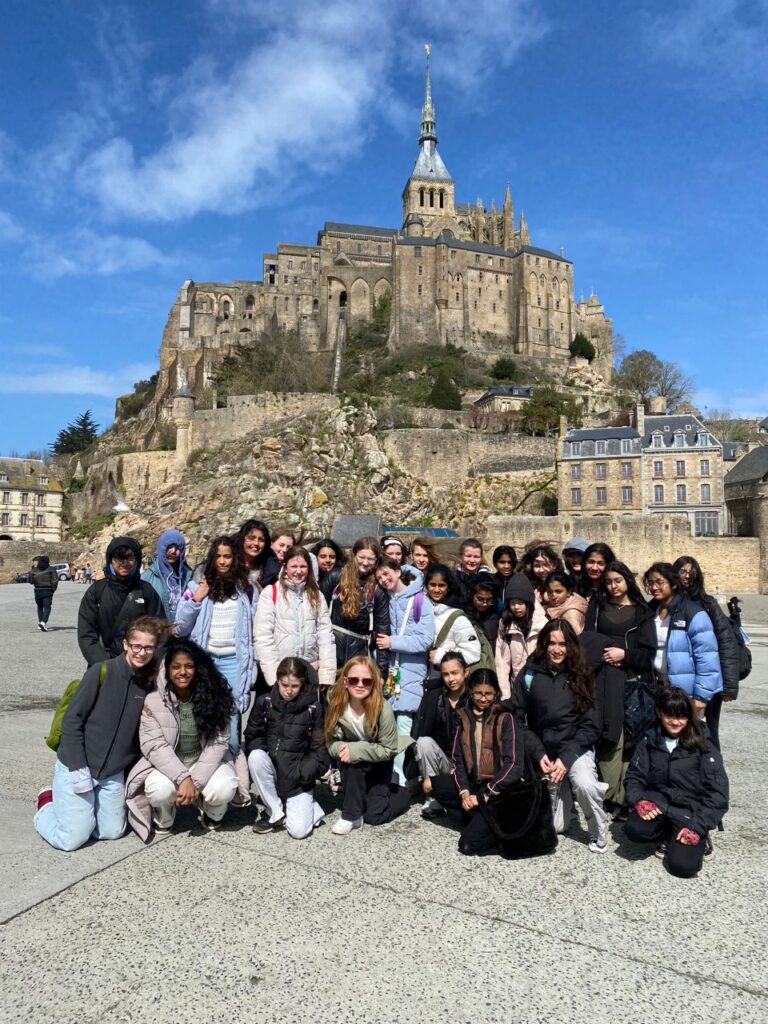
Each year group enjoys tailored experiences, including a trip to Mont St Michel in June/July for the Thirds and a Lower and Upper Fifth study trip to Boulogne, which includes morning lessons with their French pen pals.
Sixth Form pupils can take part in a study trip to Brussels during the October half-term. In addition to residential trips, the department regularly organises visits to French-language films and theatre productions, as well as themed activities and competitions – Bake competition, French Breakfast, Anthea Bell competition, French Pop Video Competition.
Weekly extra-curricular clubs are available for different year groups, offering a fun and relaxed environment to practise speaking, build confidence, and explore French culture in more depth.
Sixth Formers are encouraged to mentor younger pupils and visit local primary schools to support French learning. For those considering French at university, we run an enrichment programme and offer regular opportunities to attend language events hosted by local universities – helping pupils to deepen their passion and prepare for future study and careers.