

Computing
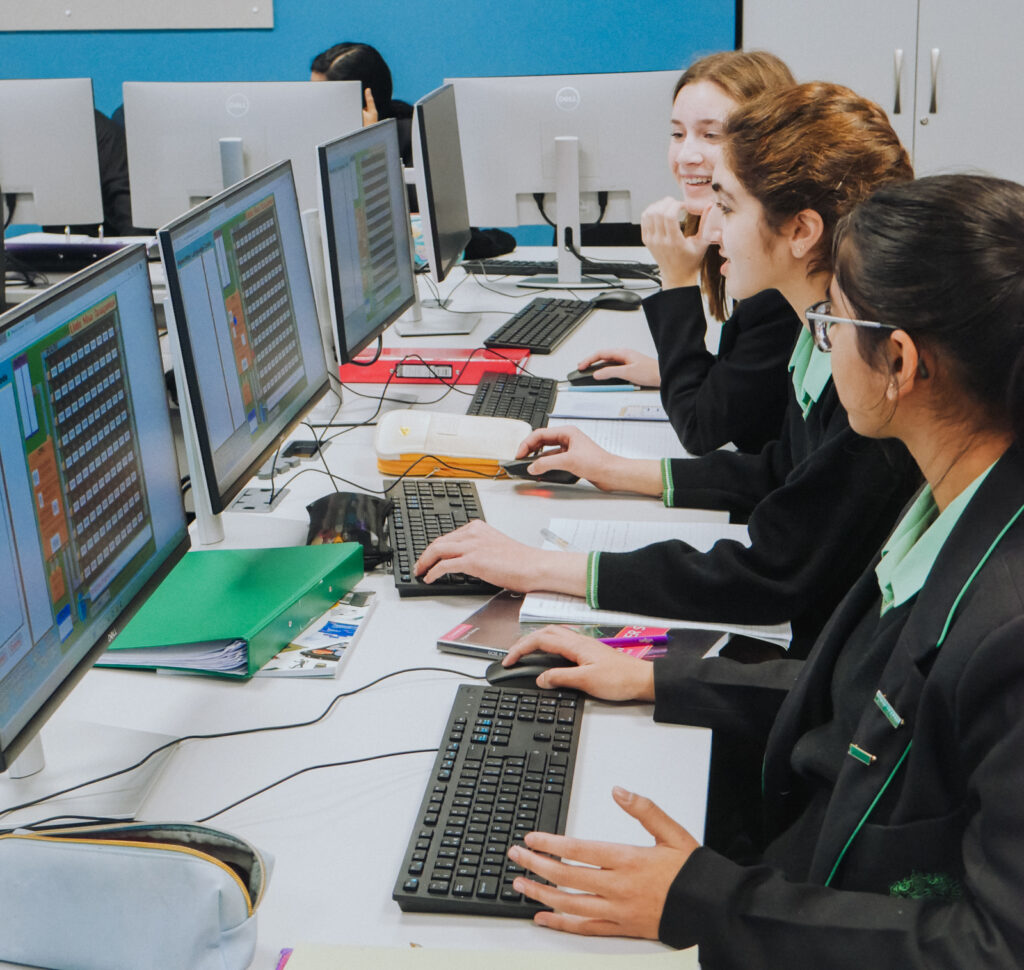
Computers and digital devices have redefined our modern lives, but too few of us know how they work, or how to program them.
Computing at KEHS aims to ensure that all students develop a detailed understanding of the science which underpins computer hardware and software; key programming and computational thinking skills; and digital literacy in key applications, particularly the Microsoft suite of productivity tools.
Students study Computing as a full year course across all three Lower School years. The curriculum is balanced between Computer Science elements, including programming and computational thinking, and digital literacy, including understanding how spreadsheets and databases work. We also cover key elements of online safety.
GCSE Computer Science is an engaging and practical course intended to promote a detailed knowledge and understanding of core computing concepts, whilst encouraging creativity and problem solving.
The course is a mixture of both theory and practical program development. Students learn about how computer hardware works, how data is stored and transmitted, as well as ethical and cultural debates around computing. Students will learn the computing language Python, continuing from their studies in Year 9, and will undertake a range of practical programming projects.
Students are taught GCSE Computer Science in the new KEHS Design Centre. We pursue the OCR J277 specification for GCSE Computer Science.
Studying Computer Science at A Level prepares pupils for university study and numerous careers as it expands their understanding of how computers work whilst also developing a range of valuable transferable skills such as the ability to think logically, analytically and creatively to solve problems.
Pupils develop theoretical knowledge of Computer Science and practical programming skills, learning how to develop complex algorithms and how to implement them. Python 3 is the main programming language used in the course, but pupils will also experience other languages whilst studying procedural, object oriented and functional programming techniques.
Meet the Head of Department
Future Careers
Studying Computer Science directly supports university study and careers in Computing, Engineering, Maths, Physics and other sciences. There remains a global shortage of female computer programmers, in particular, and careers in programming are both lucrative and rewarding.
Beyond the classroom
The Department takes part annually in the Bebras Computing Challenge, which introduces computational thinking to students. Many of those students qualify for the Oxford University Computing Challenge. We run an annual trip to Bletchley Park and the National Museum of Computing for GCSE students.