
Around 14 times every century, the planet Mercury is seen to cross the face of the Sun over a period of six hours or so. Mercury looks like a dark silhouette against the Sun’s disk as Mercury passes between the Earth and the Sun and the three bodies are lined up exactly. The last transit occurred in May 2016 and the next one will take place in November 2032. These rare events are known as ‘Transits of Mercury’. On Monday 11th November, GCSE Astronomers set up telescopes in beautiful sunshine around 11.00 am but by the time of ‘First Contact’ (when Mercury is first seen) at 12.35 pm, clouds had arrived and threatened to disappoint us. However, patience was rewarded as, during the afternoon, the clouds cleared sufficiently for over 150 girls and staff to witness the amazing event which was described by some pupils as ‘Cool’ and ‘Amazing’! We did not take photos of the event this time, but the image shown was obtained during the transit of May 2016.
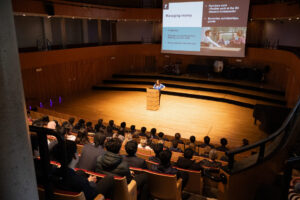
Future ready: Year 12 explore university pathways
It was a privilege for our year 12 pupils attend a jam-packed morning of higher education sessions given by leading academics and admissions staff from Birmingham, Aston, Warwick, Leicester and Nottingham Universities.